Primary Care:
Fluoride 101
Babies, toddlers, and preschool children need fluoride toothpaste and fluoride varnish to prevent tooth decay. Learn how fluoride works and the different ways children can receive its protective benefits.
Tooth Decay
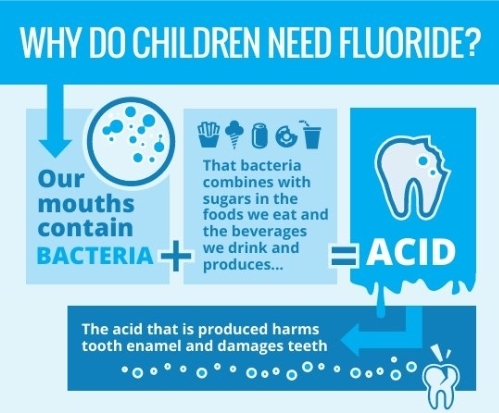
Tooth decay progresses when oral bacteria (mainly strep mutans) colonize and create a dental plaque on the teeth. When the bacteria are exposed to carbohydrates, acid is produced. The acid can then destroy teeth through the loss of tooth minerals. Fluoride helps to prevent this by strengthening teeth and repairing early tooth decay.
Sources of Fluoride
Fluoride occurs naturally in water, rocks and soil. It protects teeth in two ways: topically and systemically.
Topically
Topical fluoride strengthens teeth already present in the mouth by becoming incorporated into the surface of teeth. This makes teeth more resistant to tooth decay. Topical fluoride can also reverse early tooth decay (white spots along the gum line and between teeth or in molars) but only before a cavity (hole) is formed.
Primary sources of topical fluoride include:
- Toothpaste
- Mouth rinses
- Professionally applied fluoride varnish
- Fluoride gels and foams
- The topical effects of fluoridated water and dietary fluoride supplements
Systemically
Fluoride is deposited in the developing teeth (under the gums) and erupted teeth when ingested regularly. Systemic fluoride can also give a topical protection through saliva bathing. This helps teeth that have already emerged into the mouth be more resistant to tooth decay.
Primary sources of systemic fluoride include:
- Fluoridated water
- Dietary fluoride supplements (tablets, drops and vitamins)